ReplyLift
A SaaS platform for LinkedIn content and outreach, built for founders who know they should be visible and never find the time.
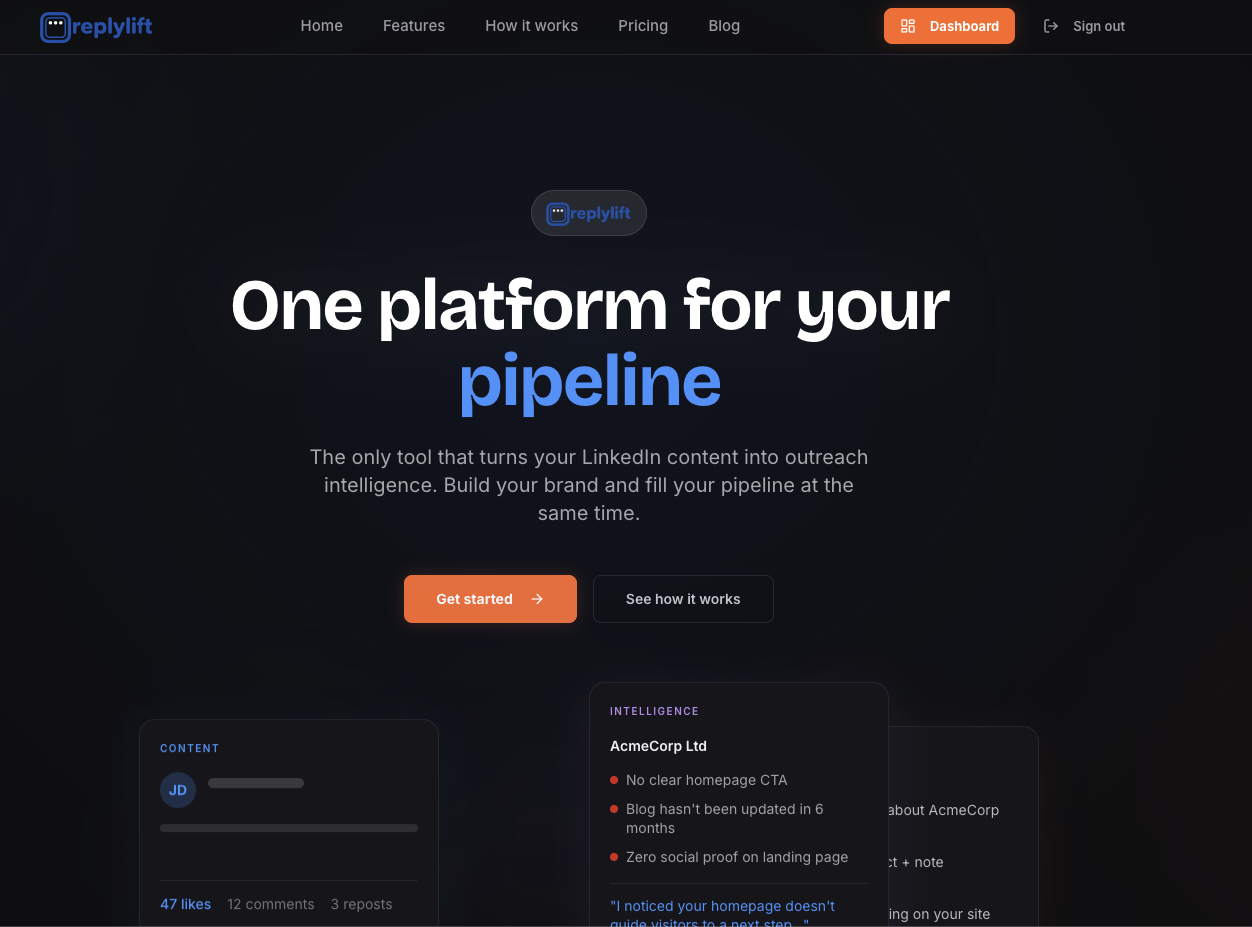
What was wrong before.
Everyone is told to show up on LinkedIn. Post consistently. Engage. Do outreach. Build in public.
The advice is good and it works. The reason people do not follow it is not ignorance, it is that there is no system. So it gets done in bursts, then abandoned for three weeks, then restarted with a guilty post about being quiet lately.
The other problem is that most outreach reads like a template, because it is one. The fastest way to be ignored on LinkedIn is to sound like everybody else.
The actual solution.
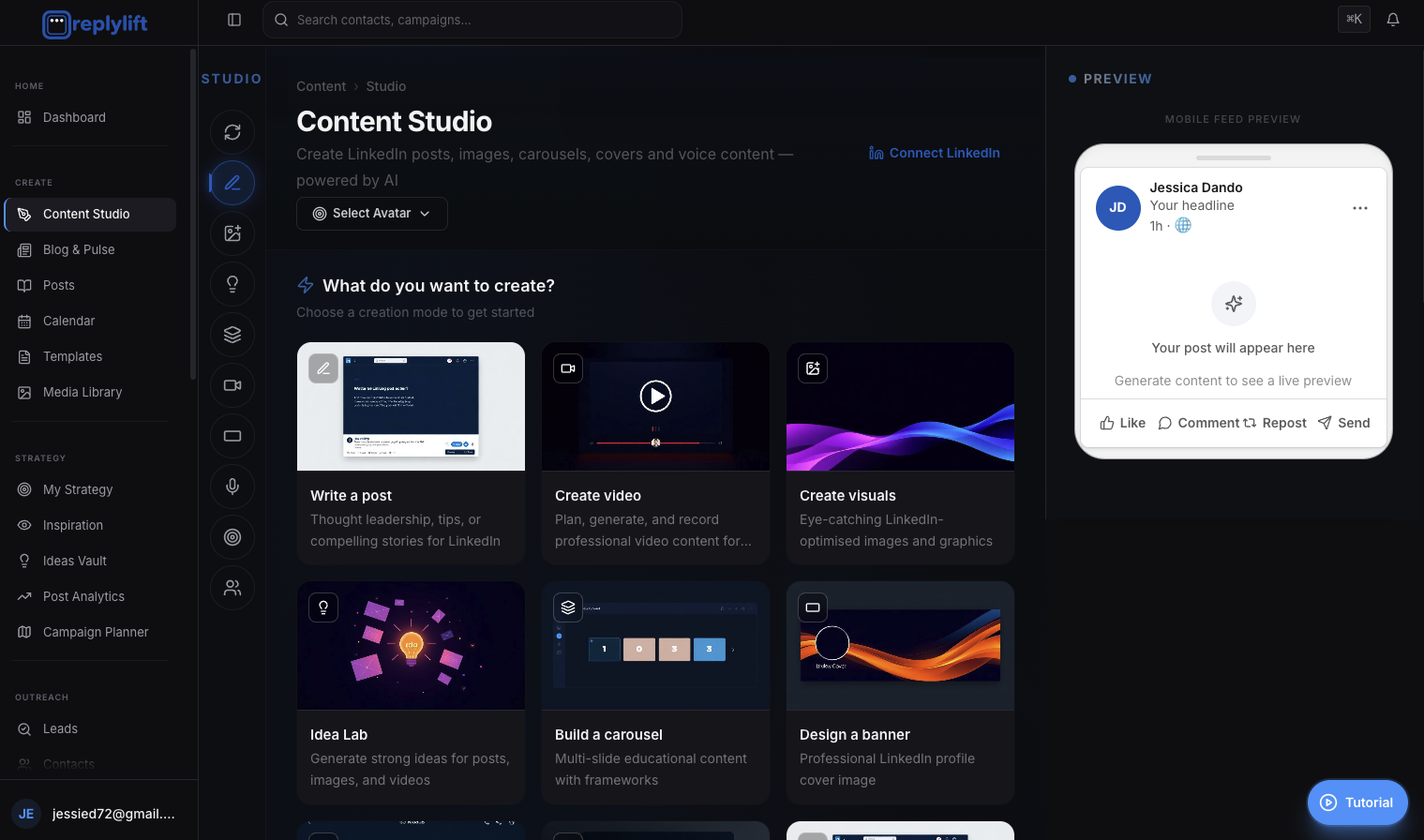
Content creation
Helps people create posts that sound like them rather than a press release, and keeps them consistent rather than sporadic. Drafts start from short prompts in the user's own voice, sit in a calendar, and go out on a schedule instead of a burst of guilt.
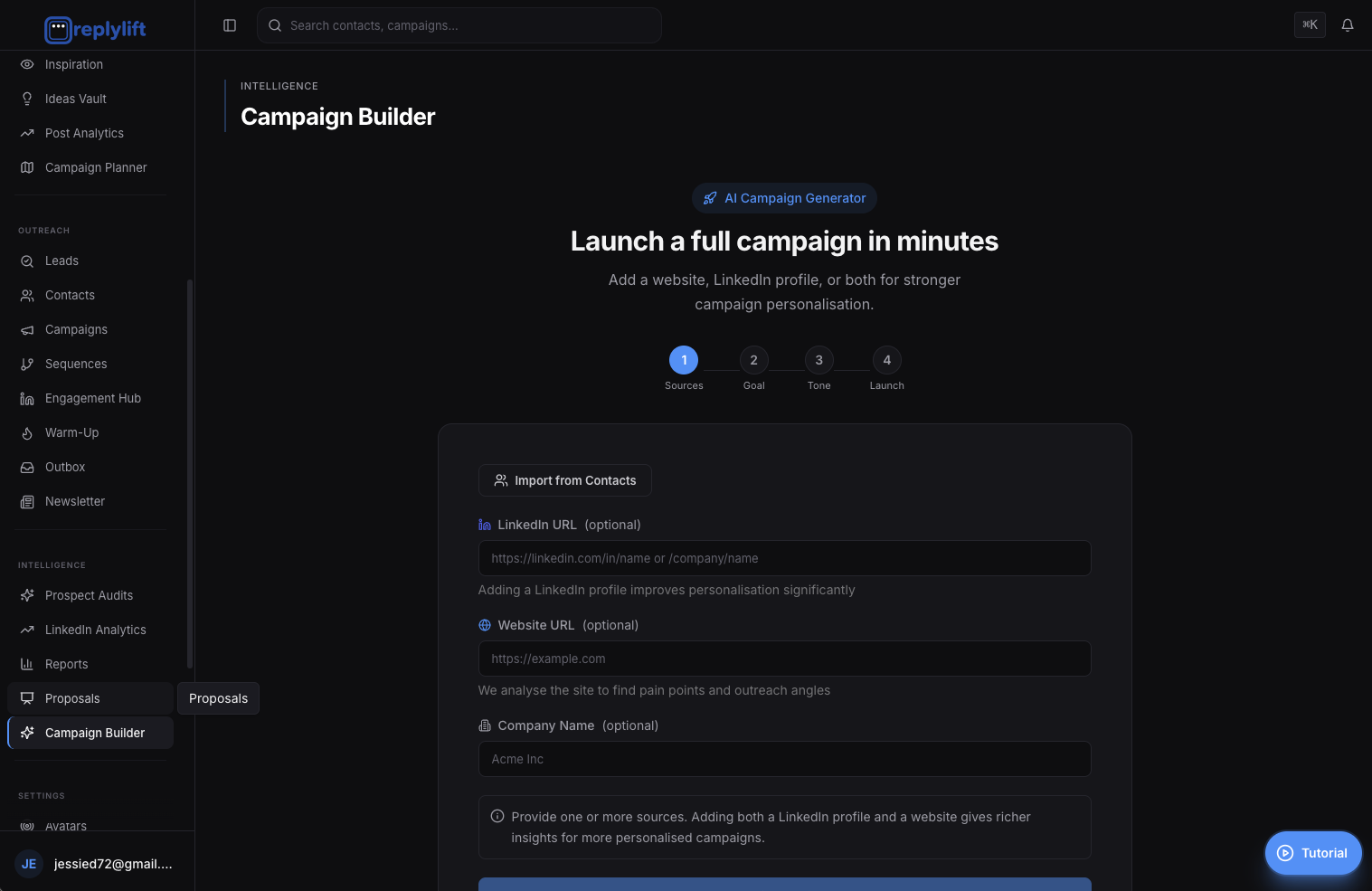
Outreach
Outreach that reads like a person wrote it, with the workflow to actually keep it going rather than doing twenty messages and stopping. Message queues, follow up rules, and a review step before anything sends.
The research engine
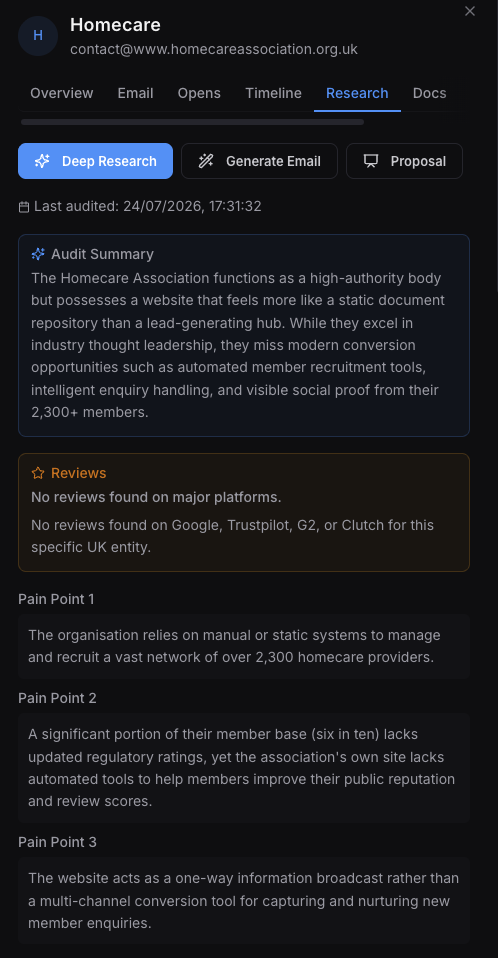
The part that turned out to be most valuable. It queries multiple AI models, including Perplexity, Claude and Gemini, to build a genuine picture of a business: their web presence, search visibility, what they rank for, their reviews, their social activity and their likely pain points.
It produces something readable rather than raw data. That distinction matters. A keyword export means nothing to a business owner. A report explaining what their website is failing to say, and who is being recommended instead of them, means everything.
The engine has since been reused in other platforms I have built, which is a reasonable argument for building things properly the first time.
Proposal and design tools
Proposal generation and design tooling built into the platform, so the work between winning interest and starting a project happens in one place rather than across five apps and a shared drive.
Decisions, not just features.
Built as a real product, not a prototype
Its own authentication, user management, dashboard and workflows. Multi tenant from the start, so onboarding a new user is a signup rather than a database migration.
Multiple AI models rather than one
Different models are good at different things, and a single model gives you a single perspective with no way of knowing how reliable it is. Running several and comparing produces something more trustworthy.
Built for reuse
The research engine was written as a component that could be lifted into other platforms, which is exactly what happened. It now powers analysis inside Joyne.
I use it myself
Which is the real test. If a tool is not good enough for the person who built it, it is not good enough.
What changed for the business.
- Live SaaS product with real users
- Research engine reused across other platforms
- Content and outreach handled in one place instead of scattered across apps
- Consistent LinkedIn presence made maintainable for founders doing twelve other jobs
Full SaaS product development. Multi model AI integration. Building components designed to be reused across products rather than trapped in one.
Services used
Get a free scope and quote
Tell me the boring job that is eating your time. I will tell you the quickest way to fix it, with a clear scope and price. No pressure, no jargon.